



How to Teach Kids Mindfulness and Focus in a Hectic World – 5 Effective Strategies

How to Teach Kids Mindfulness

Are you looking for How to Teach Kids Mindfulness? Everyone could use tools to tame anxiety in a fast-moving world. Kids who learn mindfulness and focus at a young age tend to be more capable of regulating their emotions later in life. A side effect of teaching these practices is that it can bring calm to adult caregivers as well. It doesn’t take special training or tools to implement mindfulness into daily activities with kids. It’s quite simple. Read on to discover a few tips from parents and caregivers, and how you can incorporate them into your day starting now. 

5 Effective Strategies to Teach Kids Mindfulness

How do you teach children mindfulness? here are the strategies you should follow

Breathing exercises 

Teaching children to focus on their breath helps them to stay present. As humans, our minds are generally in either “the familiar past” or the “predictable future.” Without even realizing it, we are very rarely in the present moment. Being present takes concentration, and our breath is the easiest way to send a message to our bodies that we are safe and calm. When our breathing is relaxed, our body is calm.

With kids, it can be as simple as exercises like counting breaths out loud by saying “Breathe in 1-2-3-4 and out 1-2-3-4”. It can be made fun by focusing on the sensation of the breath moving in and out of the body, the motion of the lungs, and the tummy expanding and contracting. Try it with your little ones and witness them direct their concentration and awareness to their breath and body. 

“I tell my little ones to imagine the breath going unfurling down into their arms, their fingers, their legs, and even the tips of their toes, then slowly making its way back up,” says one nanny. “It distracts them away from whatever was upsetting them almost instantly.” 

Strategies to Teach Kids Mindfulness


You may like to read: Avoid These 7 Nanny Hiring Mistakes: Experts Share Their Tips For Success

Mindful listening

Encouraging children to stop and listen to the sounds around them can help them become more aware of their surroundings and develop the ability to focus.

“One fun exercise,” says a Mom (who is also a yoga instructor) “is to have them lie quietly and tell them to start by listening to the sounds outside. Draw their attention to the sounds of voices, cars, or dogs barking in the distance. It’s amazing to watch the calm that is induced by their concentration while they strain to hear these far-away sounds. Once they seem settled, ask them to listen to the sounds on the inside. By this you mean, their heart beating, their breath moving in and out of their lungs, and their arms brushing against the floor while they lie in a restful pose.”

By, focusing on different sounds and their qualities the mind and body connect in the present moment. This induces calm and relaxation.  With practice, kids can learn to do this on their own. 
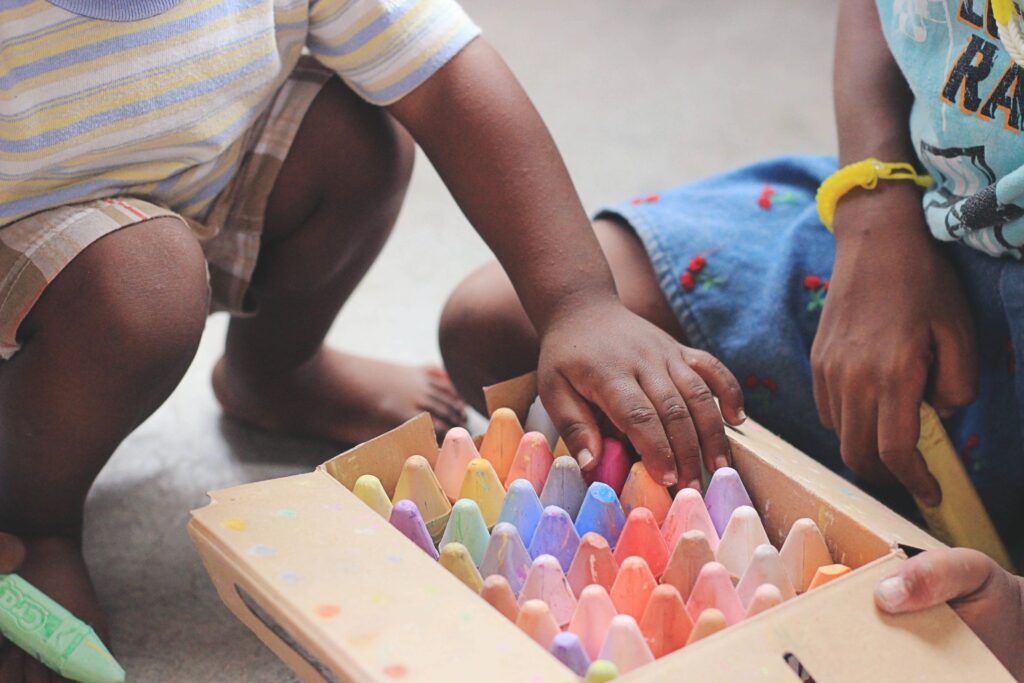
Mindful listening

Mindful coloring

Coloring books designed specifically for mindfulness can help children become more aware of their thoughts and feelings. Talk about the colors they are choosing to use and why. Give descriptive words to the colors that go beyond the label on the crayon or pen. Is it a sunshine shade of yellow? Is it an egg yoke yellow? Maybe it’s a fuzzy baby chick type of yellow?”

Instruct them to focus on the movement of their hand as they color, and the feelings that come up as they engage in the activity. This particular pastime has caught on with adults too with some amazing coloring books for the grown-ups to join in the fun with the little ones. Creating art is one of the most accessible forms of mindfulness that exist and there is no wrong way to participate. 

Mindful coloring


You may like to read: 5 Aspects you Always see in the Most Successful Nanny Placements

Mindful movement

Practicing yoga, tai chi, or other forms of mindful movement can help children develop their ability to focus on the present moment. “My kids love tai chi.

They stand with their wide feet apart and slowly sway back and forth swishing their arms from side to side in big sweeping motions” says one parent of a popular tai chi movement. “The idea is that you are moving the energy around and kids love it”.  The slow and deliberate movements of these practices can help children become more aware of their bodies and their breath, as well as their surroundings. 
Mindful movement

Mindful eating

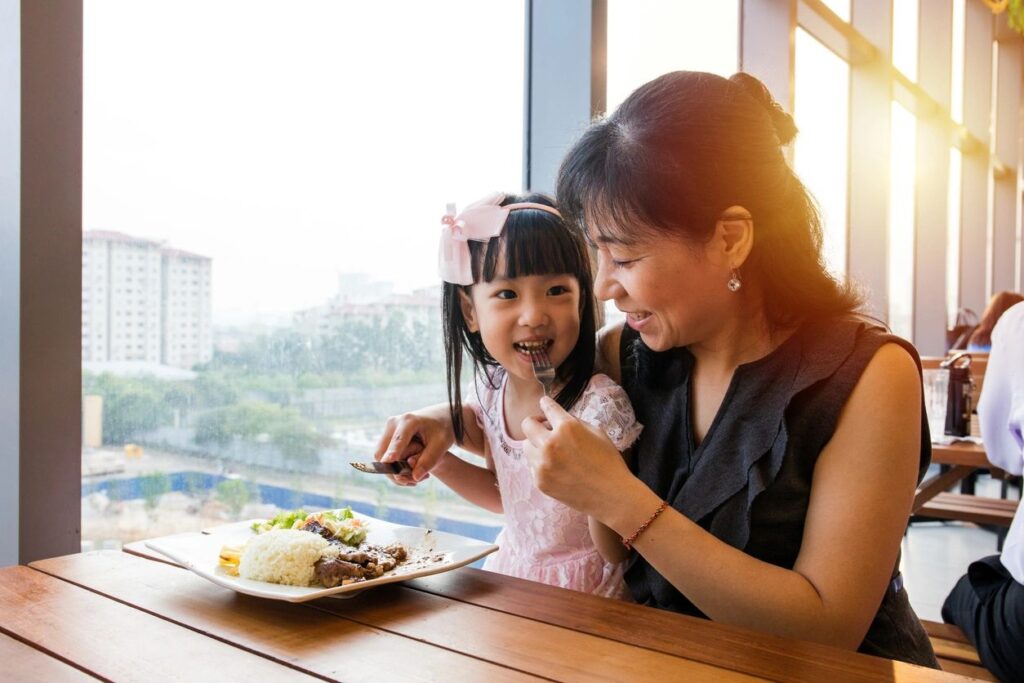
One area we all could do better is to eat more slowly. It seems everyone is in a hurry, and eating on the run is common. By modeling mindful eating with our kids we can teach them habits that will last a lifetime.

It’s proven that eating slowly is better for your digestive health. Did you know it’s also good for your mental health? By encouraging children to eat mindfully we help them become more aware of their senses, develop a deeper appreciation for the nourishment, and improve their relationship with food. They can practice focusing on the colors, smells, and textures of the food, as well as the sensations of chewing and swallowing.

Conclusion:

By learning to stay calm under stress, mindfulness can help both kids and adults become more resilient in the face of life’s challenges. These skills provide healthy coping mechanisms and they are free and accessible at any time. We have tried to cover every aspect of How to Teach Kids Mindfulness and Focus in a Hectic World. We will look for more and try to add that in the next update. How was the article? Let us know in the comment section below

In summary, mindfulness can positively impact both mental and physical well-being for people of all ages. The focus on the present cultivates awareness and provides skills to better manage stress and emotions.

Seattle’s New Domestic Workers Law: Rest and Meal Breaks

The city of Seattle recently followed eight states by passing a law designed to standardize the domestic work force (nannies, home health aides, house cleaners, and gardeners) thus bringing them out of the shadow economy of employees who

How Our Matching Process Works: Behind the Scenes at Seattle Nanny Network

Finding the right nanny-family match takes both experience and intuition. At Seattle Nanny Network, we’ve spent years perfecting our process to build strong, lasting relationships between families and caregivers. Here’s a look at how we make matches that

How to Teach Kids Mindfulness and Focus in a Hectic World – 5 Effective Strategies

Are you looking for How to Teach Kids Mindfulness? Everyone could use tools to tame anxiety in a fast-moving world. Kids who learn mindfulness and focus at a young age tend to be more capable of regulating their

Essential Guide: Preparing for Holiday Travel as a Professional Nanny

Navigating Holiday Travel With Your Employer Family The holidays can bring big changes to family routines—and for many professional nannies, that includes traveling with the family. Whether it’s a ski trip or a long visit with relatives, holiday

Survival Guide: Long Flights with Kids

Navigate long flights with kids like a pro with this survival guide When you have in-laws who live on the other side of the world, long flights with little ones are just a part of life. My first

The Power of Connection: Social Support for Caregivers’ Mental Health

Being a caregiver is a demanding and often overwhelming role. Whether you are taking care of an aging parent, a child with special needs, or a loved one with a chronic illness, the responsibilities can take a toll

How to Build a Strong Relationship with your Nanny

We’re excited to feature a guest post from Christine Wisdom of Olive You Nanny Milwaukee. Christine shares practical, heartfelt guidance on a topic every family can benefit from: how to build a strong, lasting relationship with your nanny.

Want to Offer Your Nanny Health and Other Insurance Plans? Here’s How

The pandemic has shined a light on a critical fact: affordable healthcare is essential. This applies to everyone you know, including your nanny. The Affordable Care Act (ACA) says that only employers who have 50 or more full-time

Why Elite Nannies Are Fleeing Social Media Hiring Platforms 

Premium childcare professionals are increasingly avoiding Facebook and other marketplace apps. Understanding this shift has the potential to transform your family’s search for quality care.  Many parents describe spending weeks scrolling through Facebook nanny groups and marketplace apps,

5 Childcare Trends That Will Transform Seattle Parenting in 2026

Raising a family in Seattle is no easy task. Between busy tech careers, changing family dynamics, and limited childcare options, many parents are feeling the pressure. What worked 10 or 20 years ago just doesn’t cut it anymore.

Why Nannies Leave – and How Families Can Prevent It

Finding a great nanny can feel like striking gold. The moment your child lights up when their caregiver walks through the door—or you head into your workday feeling calm and confident—you know you’ve found something truly valuable. So

Employing a Nanny during COVID-19

“Do I have to wear a mask inside the house” and “Do I have to pay the nanny if I ask them to stay home because a family member is not feeling well” – are just a few

Multilingual Homes: Raising Global Citizens with the Right Caregiver Support

In today’s world, speaking more than one language is a big advantage. It helps children think more flexibly, understand different cultures, and connect with more people. In multilingual homes, kids don’t just learn new words—they grow up surrounded

What HomePay by Care.com has to say about the American Rescue Plan and what it means for childcare

Guest Blog Post from Chelsea at HomePay As you may know, the Covid relief bill, The American Rescue Plan, is set to be signed into law this week and is loaded with provisions that will increase the professionalization

The Hidden Value of Hiring a Nanny in the Fall (Before the Holiday Rush)

Why Fall Is a Great Time to Hire a Nanny As summer winds down and school routines pick back up, fall becomes a time when families settle into a new rhythm. What many parents don’t realize is that

Learning Pod Rules and Guidelines – Provided by the National Domestic Worker’s Alliance (NDWA)

With the uncertain future of in-person school systems, the social and emotional toll on our children is becoming more evident by the day. Kids need to be around their peers and the positive impact of this on academic

Teaching Children Tolerance in the Digital Age

We were all children once. Do you ever stop to think about where our beliefs about ourselves and others came from? How do the belief systems we have all grown up with impact the world we live in

How to Write a Nanny Resume that Will Wow Family Employers

Why should you write a nanny resume that will wow family employers? Because many nanny job applicants do not write a nanny resume before applying for a job. Yet, having a solid nanny resume increases the chances of

The Surprising Ways Nature Benefits Children’s Brain Development

The average American child spends just 4-7 minutes outdoors each day in unstructured play—a dramatic change from children just a generation ago, according to the good people over at the non-profit Children and Nature. Read on to find

Sleep Training for Nannies: A Step-by-Step Approach

This blog post provides nannies with a step-by-step approach to sleep training. A nanny who has sleep training can be a solution for many families seeking relief. From assessing sleep needs to implementing a personalized sleep training